
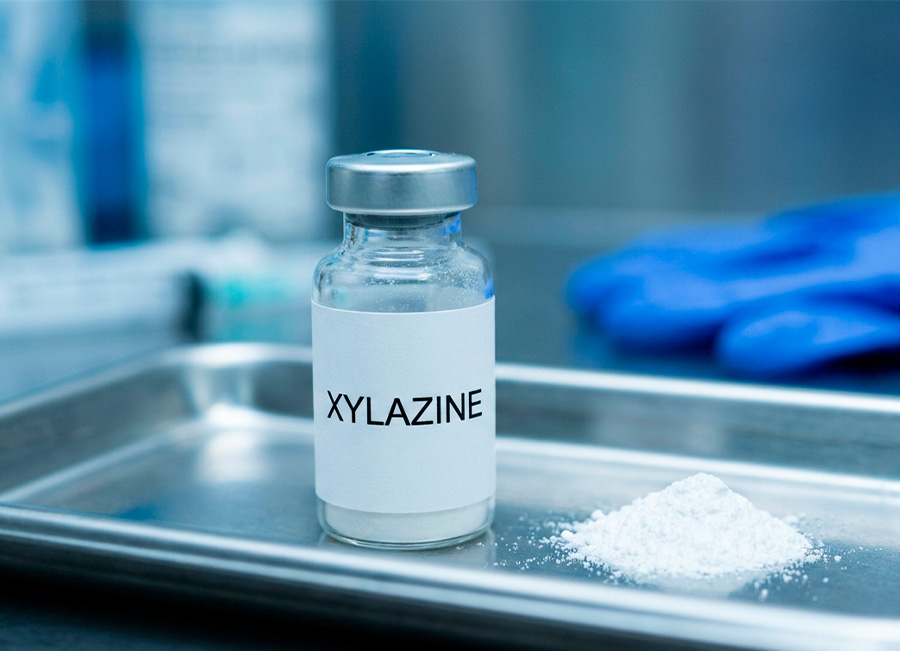
In many opioid overdose scenarios, public health discussions often focus on naloxone and urgent medical care. However, xylazine complicates that picture because it is not an opioid and its sedative effects are not directly reversed by naloxone.
Xylazine, also known as tranq, is a veterinary sedative increasingly found in the illicit fentanyl supply. Because it is not an opioid, naloxone may help address the opioid component of a fentanyl-xylazine overdose, but the profound sedation caused by xylazine can remain. Below, we take a closer look at exactly what this means.
Quick Summary: Xylazine, or tranq, is not an opioid. It is a veterinary sedative. Because xylazine acts through non-opioid mechanisms, naloxone is generally not described as reversing xylazine’s sedative effects. When combined with fentanyl or other opioids, xylazine can increase the risk of severe respiratory depression and life-threatening outcomes.
What Is Tranq (Xylazine)?
Xylazine was developed in Germany in 1962 as a potential blood pressure medication for humans. However, it ultimately failed for human use because the central nervous system depression was too severe and the blood pressure drops were considered dangerous. In the end, it was shelved for human medicine and redirected to veterinary use, where it became a sedative used for horses, cattle, and other large animals.
Today, this drug is increasingly appearing in the illicit fentanyl supply across the United States.
On the street, xylazine is often called “tranq.” When it is mixed with fentanyl, the combination is commonly known as tranq dope. It cannot be identified by sight, smell, or touch, and standard drug tests typically do not screen for it.
DEA laboratory data reported xylazine in roughly 23% of fentanyl powder and 7% of fentanyl pills seized nationwide. In other words, it can appear in many different synthetic drug mixtures. With illicit drugs, it may be difficult or impossible to know exactly what substances are present.
How Xylazine Is Used in Street Drugs
Xylazine has been reported in some illicit drug supplies, including fentanyl-related products. Because illicit substances are unregulated, their contents can vary, and the presence or amount of xylazine may be unknown to the person exposed.
From a clinical perspective, tranq dope, or fentanyl-xylazine exposure, may involve longer-lasting sedation than fentanyl alone. For people experiencing withdrawal, that effect can become part of the cycle of continued use.
The fentanyl supply has become increasingly contaminated with xylazine in some drug markets, particularly in the Northeast, where Philadelphia was among the early areas affected. The contamination has since spread south and west.
Xylazine has also appeared alongside cocaine, methamphetamine, and counterfeit prescription pills, meaning people who do not intentionally use opioids may still be exposed.
How Does Xylazine Affect the Body?
Xylazine is a central nervous system depressant. This means it can cause heavy sedation, slow heart rate, lower blood pressure, and suppress breathing. When both fentanyl and xylazine are present, those depressant effects can compound.
Xylazine has also been associated with severe skin and soft-tissue injuries, particularly among people who inject drugs.
Repeated xylazine use, especially injection, has been linked to open ulcers, deep necrotic lesions, and abscesses that can appear at or away from injection sites. These wounds may be difficult to treat and, in severe cases, can progress to bone infection or amputation. While more research is needed, one theory is that xylazine constricts blood vessels in ways that reduce oxygen flow to surrounding tissue, causing tissue damage.
How Narcan and Xylazine Interact Differently
Naloxone, sold under the brand name Narcan, works by acting on the brain’s opioid receptors. It is used in suspected opioid overdose to address opioid-related effects, particularly opioid-related respiratory depression.
Xylazine works differently. It is not an opioid. Instead, it acts through non-opioid mechanisms, including alpha-2 adrenergic activity, which means naloxone is not expected to directly reverse xylazine-related sedation.
In a fentanyl-xylazine exposure, naloxone may address the opioid component while the sedative effects of xylazine remain active. This is why a person may remain heavily sedated even after naloxone is used.
Because xylazine and fentanyl act through different mechanisms, the clinical response to a combined exposure is generally described as more complex than for opioids alone. Xylazine-related overdoses are generally discussed as medical emergencies because they may require medical support beyond naloxone alone.
Narcan in Cases Involving Xylazine
In situations where opioids are involved, public health materials generally continue to discuss naloxone as part of the overdose response. Since xylazine is often found with fentanyl or other opioids, naloxone may help address the opioid component, even though it is not expected to directly reverse xylazine itself.
Official overdose-response materials generally continue to include naloxone in suspected opioid-related cases. However, xylazine-related cases can involve ongoing sedation, slowed breathing, and reduced consciousness even after the opioid component is addressed.
Because xylazine has been associated with slowed or impaired breathing through non-opioid pathways, respiratory depression is a major concern in medical discussions of tranq-related overdoses.
Signs of a Tranq-Related Overdose
Some signs associated with xylazine-related overdose may include:
- Extreme sedation or unconsciousness
- Slow or stopped breathing
- Low heart rate
- Blue lips, especially when opioids are involved
- Non-responsiveness even after naloxone is used
These symptoms are commonly treated in public health materials as warning signs of a possible overdose or medical emergency. Because xylazine and opioids can overlap, calling 911 and administering naloxone in any suspected opioid-related overdose is the standard recommendation.
Why Tranq Is Especially Dangerous
Xylazine compounds the difficulty of fentanyl exposure because it may not be detectable by users and acts through mechanisms different from those addressed by opioid overdose reversal medications. There is currently no FDA-approved reversal agent for xylazine in humans. Because it has not historically been classified the same way as many controlled substances, enforcement and tracking have also lagged behind its spread.
Additionally, xylazine can produce physical dependence with its own distinct withdrawal syndrome. Symptoms may include severe anxiety, agitation, and dangerous spikes in heart rate and blood pressure. When patients enter treatment expecting opioid withdrawal protocols and encounter symptoms related to xylazine, care can become more complex.
This creates a challenge for treatment providers and patients alike. People affected by xylazine may need support for opioid dependence, xylazine-related withdrawal symptoms, and serious skin wounds at the same time.
Treatment for Xylazine and Opioid Addiction
There is no medication that reverses xylazine in the same way naloxone reverses opioids. Treatment for tranq-related addiction is therefore generally described as supportive and clinically managed. Care may involve medical professionals familiar with xylazine, opioid use disorder, withdrawal symptoms, and wound-related complications.
In clinical settings, care for xylazine and opioid use may involve medically supervised stabilization, especially when withdrawal symptoms, opioid dependence, or serious wounds are present. During this process, clinicians may monitor heart rate, blood pressure, mental status, and other medical concerns.
When opioid use is also involved, clinicians may consider evidence-based treatment approaches based on the patient’s condition, substance use history, and medical needs. Xylazine-related withdrawal symptoms may require individualized clinical management.
Wound care is another important issue connected to xylazine. Tranq-related skin lesions can require medical evaluation and may complicate the treatment process when substance use disorder is also present. Programs that can coordinate addiction treatment and medical care may be better positioned to address these overlapping needs.
Inpatient and outpatient rehabilitation programs commonly offer behavioral therapy, structure, and recovery support for people dealing with substance use disorders. United Recovery Project offers these levels of care. The specific path depends on the individual, including their medical history, substance use pattern, withdrawal symptoms, and overall needs.
Because withdrawal experiences can vary widely, treatment planning is generally handled on an individual basis by qualified professionals.
When to Seek Help
Xylazine has changed the overdose crisis by making many overdose situations more complicated. Because xylazine acts differently from opioids, situations involving both fentanyl and xylazine are generally described as more clinically complex than those involving opioids alone.
Substance use disorders can be complex, especially when fentanyl, xylazine, or other substances are involved. United Recovery Project offers addiction treatment programs and can provide information about available levels of care. Call us at 888-960-5121; we’re here to guide you toward recovery and a happier and healthier life!